The mix is determined by the application
When selecting the optimum material for a tableting tool, it is important to weigh up all the parameters that will be important when the tool is later used in the production process, for example, pressing force, toughness, and resistance to wear, breakage and corrosion – after all, no material can do everything equally well.
For this reason, we at NOTTER define individual material specifications for our tools and have the corresponding steels developed and produced exclusively for us. This enables us to offer alloys and hardening mixtures that are precisely tailored to the respective application.

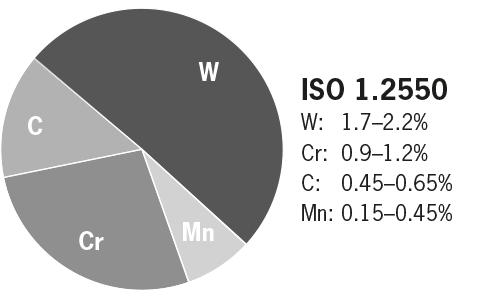
More precise than the standard requires
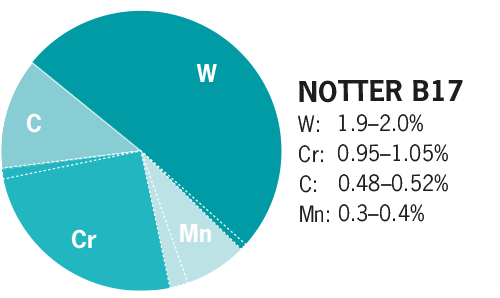
All our materials are produced according to specifications that comply with German and international DIN/ISO standards. However, the standards specify broad tolerances for the volume fractions of the alloy components. As we place a high value on constant, reproducible material properties, we have significantly tightened the volume fraction tolerances for the materials manufactured according to our specifications and have given the materials our own quality designations, like e.g. B17.
Two opposing properties in the same tool?
Even the best material only develops its full potential through the right hardening process. That is why we rely not only on high-quality materials, but also on a process that clearly sets us apart in the market: differential hardening. It is our USP, and hardly anyone else masters it in this form the way we do.
Hardness and toughness are important parameters when it comes to tableting tools. The head must be hard to minimize wear, while the tip must be rather tough so that it does not break under load.
No problem for us – in addition to our wide range of materials, we are the only manufacturer capable of hardening the head and tip independently of each other, thus ensuring an extremely long service life.
The special hardening process that we have developed allows the head and tip to be treated separately.